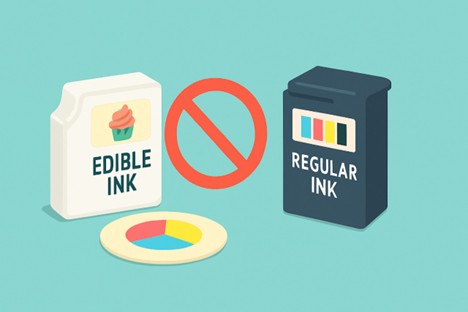
Edible Ink vs. Regular Ink: Why You Should Never Mix Them
The world of cake and confectionery decoration has evolved far beyond simple icing and piping. Today, edible printing allows bakers and home chefs to print vibrant photos, logos, and custom designs directly onto cakes, cookies, and chocolates using food-safe technology. From birthday parties to wedding cakes, edible images are everywhere—and they look amazing.
But with the rise of edible printing comes an important safety concern: the difference between edible ink and regular ink. While both might look similar in appearance and packaging, they are completely different in purpose, composition, and safety. Confusing the two—or worse, mixing them—can lead to serious health risks.
This article will help you understand why edible ink and regular ink should never be used interchangeably and how to use edible ink safely and effectively.
What Is Edible Ink?
Definition
Edible ink is a food-grade ink specially designed to be safe for human consumption. It is used in printers to create high-quality images and text on edible surfaces such as frosting sheets, wafer paper, and even chocolate. These prints are then applied to cakes, cookies, cupcakes, and other desserts to enhance their visual appeal.
Key Ingredients
Unlike standard printer ink, edible ink is made from ingredients that are safe to eat. Though formulations may vary slightly by brand, most edible inks include:
- Purified water – as a base liquid
- Glycerin or sugar-based syrup – to help control viscosity
- Food-grade colorants – natural or artificial food dyes approved by food safety authorities (like FDA or FSSAI)
- Mild preservatives – to extend shelf life without compromising food safety
These ingredients are carefully chosen to ensure the ink flows smoothly through edible ink printers while maintaining safety and print quality.
Where It’s Used
Edible ink is commonly used in:
- Bakeries for printing images on cakes, cupcakes, and cookies
- Chocolatiers for adding logos or designs to chocolate products
- Home baking for personalized edible treats
- Food businesses that offer branded desserts or themed products
Edible ink allows for creativity in dessert decoration while keeping everything completely safe to eat.
What Is Regular Ink?
Definition
Regular ink, also known as standard printer ink, is the type of ink used in everyday inkjet printers for printing on paper. It is not intended for any food-related use. While it may produce high-quality visuals on paper, it contains chemical substances that are toxic if ingested.
Regular ink is strictly for non-edible applications and is commonly found in office printers, home printers, and commercial printing equipment.
Common Components
Regular ink is made from a mixture of chemical ingredients that may include:
- Solvents and carriers – such as glycol, alcohols, or petroleum-based liquids
- Color pigments or dyes – some of which may include heavy metals or synthetic chemicals
- Stabilizers and preservatives – to ensure the ink performs well in different conditions
- Surfactants – to improve flow and print quality on paper
These components help create sharp, long-lasting prints—but they are absolutely not safe for consumption.
Intended Usage
Regular ink is used for:
- Printing text and images on standard paper
- Documents, photos, posters, and marketing materials
- Non-food packaging and labeling
It is never meant to come into contact with food or be used on anything that will be consumed. Even small traces of regular ink on edible items can pose serious health risks.
Main Differences Between Edible Ink and Regular Ink
Although edible ink and regular ink may appear similar in cartridges or packaging, they are vastly different in how they're made, what they're used for, and their level of safety. Understanding these differences is essential to ensure the proper—and safe—use of edible printing technology.
1. Composition
- Edible Ink is made entirely from food-grade ingredients like purified water, food-safe colorants, and sweeteners such as glycerin or sugar-based syrup. These inks are developed under strict food safety standards.
- Regular Ink, on the other hand, contains chemical compounds including synthetic dyes, petroleum-based solvents, and industrial preservatives. These are designed for performance on paper, not for safe human consumption.
2. Purpose
- The purpose of edible ink is to create vibrant, detailed images on consumable surfaces like frosting sheets or wafer paper. It's used for decorating food items such as cakes, cupcakes, cookies, and even candies.
- Regular ink is formulated for printing on traditional materials such as paper, cardboard, or photo stock. It’s intended for documents, photos, marketing materials, and other non-edible items.
3. Safety
- Edible ink is safe to eat, as it complies with food safety guidelines set by agencies such as the FDA or FSSAI. It's produced in clean environments to prevent contamination.
- Regular ink is toxic if ingested. Even a small amount can cause health issues. It’s not made with food safety in mind and should never be used anywhere near edible products.
4. Printer Compatibility
- Edible ink must be used in printers that are designated only for food use. These printers are typically standard inkjet models that have been set aside or specially cleaned and maintained to be food-safe.
- Regular ink printers are not suitable for edible printing. Switching between regular and edible ink in the same printer, even after cleaning, can lead to contamination and malfunction. For safe edible printing, you must use a dedicated printer that has never had regular ink inside it.
Why Mixing Edible Ink and Regular Ink Is Dangerous
Some people new to edible printing may think it’s okay to use the same printer for both regular and edible inks or to swap cartridges. This is a serious mistake. Mixing the two inks or using a printer previously filled with regular ink for edible printing introduces multiple risks that can affect your health, equipment, and reputation.
1. Health Risks
The most critical concern is toxic exposure. Regular ink is filled with chemicals not meant to be consumed. If even a trace of it ends up on food, it can lead to:
- Stomach irritation or poisoning
- Allergic reactions
- Exposure to potentially carcinogenic compounds
These risks make it clear that regular ink has no place in the edible printing process, no matter how small the amount.
2. Cross-Contamination
Even if you thoroughly clean a printer that was used with regular ink, tiny amounts of residue may still remain in the ink lines, print heads, or cartridges. These residues can mix with your edible ink and contaminate the entire batch, making it unsafe for consumption.
Cross-contamination is especially dangerous in professional settings where food safety regulations are strict. Using a previously contaminated printer could ruin an entire production run.
3. Damage to Printer
Edible ink and regular ink are formulated differently. They have different viscosity levels, drying times, and chemical makeup. Mixing them or using the wrong type in the wrong printer can cause:
- Clogs in the print head
- Ink leakage
- Unstable or poor-quality prints
- Permanent printer damage
This can reduce the life of your printer and require expensive repairs or replacements.
4. Food Safety Laws and Customer Trust
If you’re selling edible products, using contaminated or improperly printed items can violate food safety laws. Regulatory authorities may impose fines or even shut down your operations.
More importantly, customers expect that what they’re eating is safe and properly handled. If someone gets sick from consuming food printed with unsafe ink, it can damage your brand’s reputation and open you up to legal liability.
Can You Convert a Regular Printer into an Edible Printer?
Why It’s Not Safe
Technically, some edible ink cartridges can fit into regular inkjet printers, which might make it seem like you can simply switch inks and start printing on frosting sheets. But doing this is not only unsafe—it’s highly discouraged.
Regular printers are designed to handle chemical inks. Once these inks have been used in a printer, tiny traces remain inside the printhead, ink lines, and internal components. Even thorough cleaning can’t fully remove these chemical residues. As a result, switching to edible ink in a previously used printer contaminates the edible ink and makes any printed food items unsafe to eat.
Additionally, cleaning a printer to remove regular ink can be extremely difficult, and the process may actually damage the printer or render it unreliable for edible printing.
What to Do Instead
The safest and most professional option is to use a brand-new printer solely for edible printing. Here’s how to do it right:
- Purchase a compatible inkjet printer that has never used regular ink.
- Load it only with certified edible ink cartridges.
- Use it exclusively for edible printing—no paper printing or other non-food projects.
You can also buy pre-configured edible printer bundles, which come with everything you need: an edible printer, edible ink, and frosting sheets or wafer paper. These kits are designed to ensure you stay within food safety standards.
Tips for Safe Edible Printing
Edible printing can be a fun and creative addition to your baking business or home kitchen—as long as it’s done safely. Here are a few essential tips to help you get started the right way:
1. Use Dedicated Printers Only
Never use the same printer for both regular and edible ink. Even one-time use of regular ink will contaminate the machine permanently. Invest in a separate printer just for edible projects, and clearly label it so there’s no confusion.
2. Keep Everything Clean
Since you’re dealing with items that will be consumed, hygiene is critical. Make sure to:
- Clean the printer’s exterior and workspace regularly
- Wash your hands before handling edible prints
- Avoid dust or food particles near the printer
- Handle frosting sheets and wafer paper with clean gloves or tools
Cleanliness helps ensure both print quality and food safety.
3. Store Ink Safely
Edible ink, like any food product, must be stored properly to maintain its safety and performance:
- Keep cartridges in a cool, dry place
- Avoid exposing them to direct sunlight or heat
- Follow the manufacturer’s expiration and storage guidelines
- Never reuse old or expired cartridges
Proper storage keeps your ink fresh, safe, and effective.
Conclusion
When it comes to edible printing, safety is not optional. Although edible ink and regular ink may look similar from the outside, they are designed for completely different purposes and are not interchangeable.
Here’s a quick recap:
- Edible ink is food-safe, made with ingredients approved for consumption.
- Regular ink contains harmful chemicals that should never touch anything edible.
- Mixing or swapping these inks—even once—can lead to serious health risks, printer damage, and legal issues.
- The best practice is to use a dedicated printer with certified edible ink—and nothing else.
Final warning: If you’re creating edible art, treat it like food—because it is. That means using the right tools, maintaining strict cleanliness, and never compromising on safety. The results will not only look amazing—they’ll also be safe and enjoyable for everyone.
